
Best Master's in Physical Education Teaching and Coaching Programs in 2026
The top 25 out of 93 programs reviewed from the IPEDS database, ranked on degrees awarded and local teacher pay. CIP 13.1314.
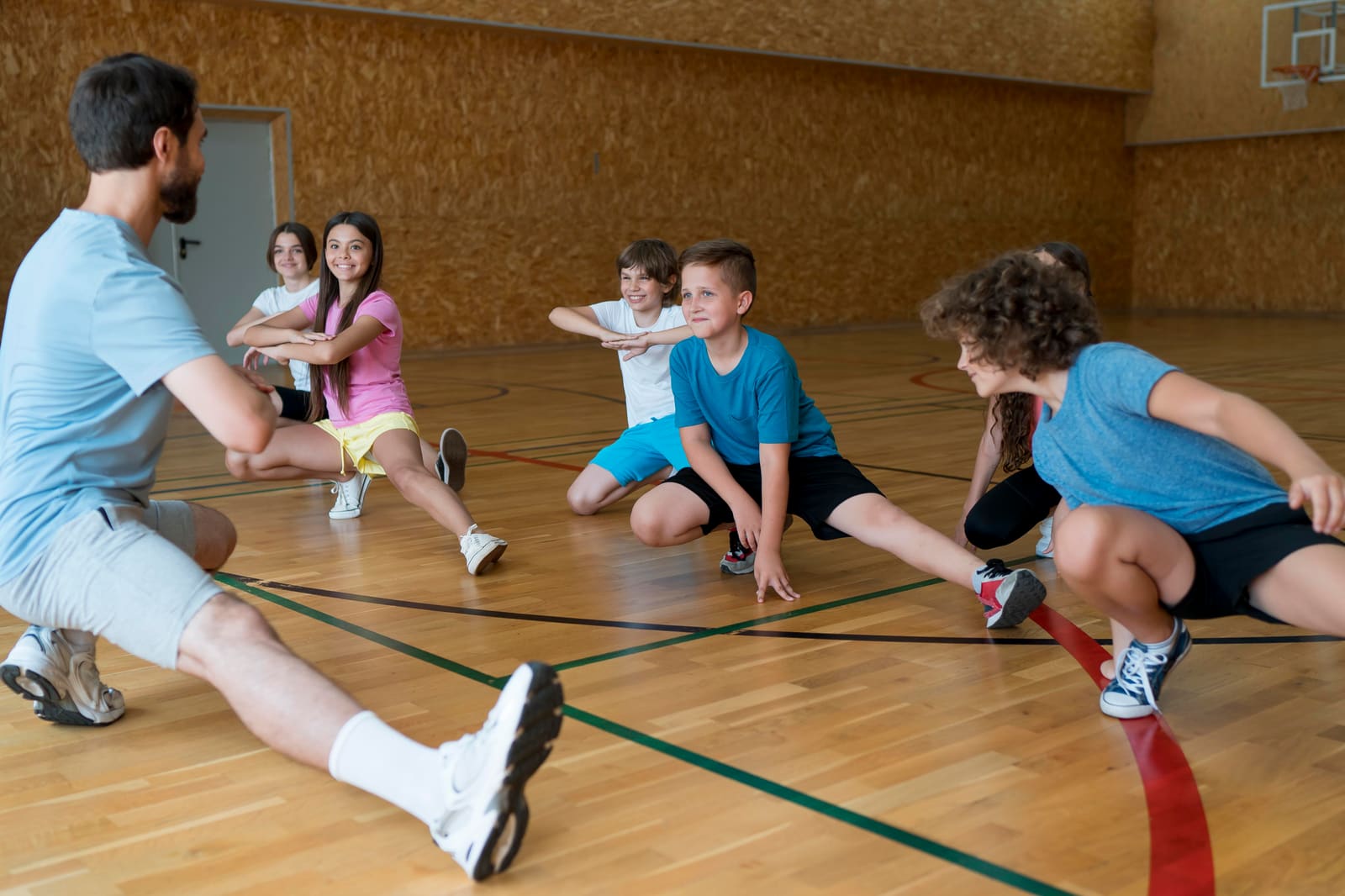
A master's in physical education program teaching and coaching prepares people to teach health and physical education and, in many cases, to coach school athletics. Coursework covers exercise science and motor development, adapted physical education for students with disabilities, and PE-specific teaching methods. Some students are career changers seeking an initial teaching license, while others are already-licensed teachers deepening their expertise or adding a health or coaching endorsement, and graduates commonly teach at the elementary, middle, or high school level.
- Most master's programs run 30 to 36 credits and take about two years, with many built to be completed part-time by working teachers.
- 28 of 93 ranked programs offer an online or hybrid option.
- Graduates most often work as secondary school teachers, where the median wage is $72,040.
- Graduate programs are ranked on degrees awarded, cost-of-living-adjusted local pay, and institutional standing, not the undergraduate stats that do not describe a master's.
- 1
Azusa Pacific University
79score- 59Master's/yr
- $101,860Metro teacher pay
- Master of Science in Kinesiology, Sport and Physical Education concentration
- Online
About the programAzusa Pacific University offers a Master of Science in Kinesiology with a Sport and Physical Education concentration, delivered fully online and asynchronously for maximum flexibility. The 30-unit concentration leans toward curriculum design, leadership and administration, ethics, and sport psychology, and small cohorts of roughly 15 to 20 students keep the student-to-faculty ratio near ten to one. Candidates finish with a capstone project rather than a thesis, an applied endpoint that fits professionals building expertise for coaching, program leadership, or advanced teaching. This is a non-licensure degree; educators seeking a credential pursue APU's separate M.A. in Physical Education, which pairs with a Single Subject Teaching Credential leading to an SB 2042 Preliminary credential to teach and coach across K-12 and beyond. Offered by an institution accredited through WSCUC, the MS reads as a practice-focused path for those who already hold or do not need licensure. Earning a master's degree in physical education teaching and coaching is a common route toward becoming one of California's secondary school teachers.
Why it ranks hereSchool siteA master's degree earns its rank on program-appropriate signals, not undergraduate ones: established scale, local teacher pay, and institutional strength. On the first, it is clearly established, turning out 59 master's degrees a year, one of the larger cohorts in the specialty. Its graduates step into Los Angeles-Long Beach-Anaheim, CA, where elementary teachers earn a median $101,860, roughly $89,692 once local cost of living is factored in, a real-world read on what the credential is worth in that market.
Area teacher pay: Elementary School Teachers, Except Special Education, U.S. Bureau of Labor Statistics, Occupational Employment and Wage Statistics May 2025, adjusted for local cost of living via U.S. Bureau of Economic Analysis, Regional Price Parities. A location figure, not this program's graduate earnings.
- 2
CUNY Brooklyn College
68score- 39Master's/yr
- $96,900Metro teacher pay
- Physical Education Teacher, Master of Science in Education
- Licensed by the New York State Education Department-accredited
- On-campus
About the programBrooklyn College offers a Master of Science in Education for physical education teachers, licensed by the New York State Education Department and structured around three tracks that meet candidates wherever they stand on the certification ladder. The Professional Track carries students directly to Professional certification, the Pre-Professional Track builds toward Initial and then Professional certification after three years of full-time teaching, and the TransB Certificate Program routes candidates to Transitional B certification. A supervised student teaching practicum in public and private schools anchors the degree in real classrooms, and fingerprint verification is required for placements with the New York City Department of Education. The program's deep roots in the city are evident in its graduates, who make up a large share of New York City's Pre-K-12 physical education teachers. Delivered on campus, it functions as a direct pipeline into the city's public schools. A master's-level path in physical education teaching and coaching, it builds toward a career among secondary school teachers in New York.
Why it ranks hereSchool siteFor a graduate program we set aside undergraduate figures and weigh three things instead: how established it is, the local market its graduates enter, and the institution's standing. On the first, it is clearly established, turning out 39 master's degrees a year, one of the larger cohorts in the specialty. Its graduates step into New York-Newark-Jersey City, NY-NJ, where elementary teachers earn a median $96,900, roughly $86,085 once local cost of living is factored in, a real-world read on what the credential is worth in that market.
Area teacher pay: Elementary School Teachers, Except Special Education, U.S. Bureau of Labor Statistics, Occupational Employment and Wage Statistics May 2025, adjusted for local cost of living via U.S. Bureau of Economic Analysis, Regional Price Parities. A location figure, not this program's graduate earnings.
- 3
West Virginia University
65score- 127Master's/yr
- Physical Education Teacher Education, M.S.
- On-campus
About the programWest Virginia University offers a fully online Physical Education Teacher Education M.S. whose 30 credit-hour curriculum aligns with SHAPE America standards and lets students choose among concentrations in curriculum and instruction, interscholastic sport administration, or models-based physical education. The program is explicitly not an initial licensure route, so it reads as advanced study for already-certified teachers, some of whom may earn a state or district endorsement upon completion. Advanced lab experiences ask students to apply their skills in K-12 settings, keeping the online coursework tied to real classrooms and gymnasiums. An accelerated B.S./M.S. pathway lets current WVU physical education and kinesiology majors move efficiently into the graduate degree. The concentration menu and endorsement orientation make it a fit for practicing physical educators specializing and advancing in their careers. A master's-level path in physical education teaching and coaching, it builds toward a career among secondary school teachers in West Virginia.
Why it ranks hereSchool siteMaster's programs are judged differently here. Undergraduate stats do not apply, so the ranking looks at whether the program is established, the pay its graduates walk into locally, and how the university stands behind it. On the first, it is clearly established, turning out 127 master's degrees a year, one of the larger cohorts in the specialty.
- 4
The University of Texas at Austin
65score- 86Master's/yr
- Physical Education Teacher Education (PETE) Master's Program
- On-campus
About the programThe University of Texas at Austin offers a Physical Education Teacher Education master's designed for teacher-coaches, with a research-driven and culturally responsive curriculum that asks students to think critically about how physical education is taught. Rather than dividing into subject tracks, the roughly 24-month program organizes itself around three culminating routes: a Master of Arts with thesis at 30 credit hours, a Master of Arts with report at 33 hours, or a coursework-only Master of Education at 36 hours. That structure lets students calibrate how much original research they take on based on their career goals, from scholarship-minded educators to practitioners focused on classroom application. At least six credit hours must come from outside the department, encouraging a broader intellectual base. Taught on campus, the program suits current and aspiring educators who want to deepen both their teaching and their understanding of the discipline. A master's-level path in physical education teaching and coaching, it builds toward a career among secondary school teachers in Texas.
Why it ranks hereSchool siteA master's degree earns its rank on program-appropriate signals, not undergraduate ones: established scale, local teacher pay, and institutional strength. On the first, it is clearly established, turning out 86 master's degrees a year, one of the larger cohorts in the specialty.
- 5
Ohio University-Main Campus
65score- 56Master's/yr
- Physical Education Pedagogy concentration (M.Ed./M.S., School of Recreation and Sport Sciences)
- On-campus
About the programOhio University offers a Physical Education Pedagogy concentration, available as an M.Ed. or M.S. through its School of Recreation and Sport Sciences, for teachers who want to sharpen their instructional craft. Applicants must already hold teaching certification from an accredited undergraduate program, which positions the degree as an advanced study option for practicing physical educators rather than a first path to licensure. Students choose between a thesis track of 45 quarter hours, including six thesis hours, and a non-thesis track of at least 50 quarter hours, letting them lean toward research or applied practice. A related Coaching Education concentration in the same school offers a parallel option for those focused on athletics. Full-time students typically complete the concentration in a single academic year on campus. As a master's degree in physical education teaching and coaching, it is one of the programs that lead to careers as secondary school teachers in Ohio.
Why it ranks hereSchool siteMaster's programs are judged differently here. Undergraduate stats do not apply, so the ranking looks at whether the program is established, the pay its graduates walk into locally, and how the university stands behind it. On the first, it is clearly established, turning out 56 master's degrees a year, one of the larger cohorts in the specialty.
- 6
Valdosta State University
65score- 52Master's/yr
- Master of Education in Health and Physical Education
- Online
About the programValdosta State University offers an online Master of Education in Health and Physical Education aimed squarely at practicing teachers rather than newcomers. Admission requires a valid level-four professional teaching certificate in Health and/or Physical Education, and applicants must be currently employed at least 20 hours per week as a P-12 teacher in the field, so the coursework builds directly on daily classroom work. The single-major program carries no named concentrations, keeping the focus tight on advancing pedagogy across 33 credit hours. It admits only for summer semester, a rhythm that fits teachers coming off the school year, and culminates in an advanced portfolio that documents growth in practice. Graduates may become eligible to upgrade to level-5 certification, marking the degree as a career-advancement credential for those already in the profession. Graduates of this physical education teaching and coaching program at the master's level often go on to work as secondary school teachers.
Why it ranks hereSchool siteA master's degree earns its rank on program-appropriate signals, not undergraduate ones: established scale, local teacher pay, and institutional strength. On the first, it is clearly established, turning out 52 master's degrees a year, one of the larger cohorts in the specialty.
- 7
Manhattanville University
65score- 34Master's/yr
- $96,900Metro teacher pay
- Master of Arts in Teaching in Physical Education and Sport Pedagogy
- On-campus
About the programManhattanville offers a Master of Arts in Teaching in Physical Education and Sport Pedagogy that leads to New York State physical education teacher certification. The non-thesis structure, capped by a comprehensive exam and a student teaching semester in the final term, keeps the focus on classroom readiness rather than a research project. Credit requirements range from 39 to 57 depending on the prerequisite coursework a candidate still needs, and the average student finishes in about two and a half years, with a five-year maximum window. Classes meet on weeknight evenings, a schedule clearly designed to accommodate students who work during the day. Together these features frame it as a practice-oriented licensure pathway built for working adults entering the physical education profession. As a master's degree in physical education teaching and coaching, it is one of the programs that lead to careers as secondary school teachers in New York.
Why it ranks hereSchool siteFor a graduate program we set aside undergraduate figures and weigh three things instead: how established it is, the local market its graduates enter, and the institution's standing. On the first, it is clearly established, turning out 34 master's degrees a year, a steady if smaller cohort. Its graduates step into New York-Newark-Jersey City, NY-NJ, where elementary teachers earn a median $96,900, roughly $86,085 once local cost of living is factored in, a real-world read on what the credential is worth in that market.
Area teacher pay: Elementary School Teachers, Except Special Education, U.S. Bureau of Labor Statistics, Occupational Employment and Wage Statistics May 2025, adjusted for local cost of living via U.S. Bureau of Economic Analysis, Regional Price Parities. A location figure, not this program's graduate earnings.
- 8
Northwest Missouri State University
64score- 49Master's/yr
- Master of Science in Education in Health and Physical Education
- Online
About the programNorthwest Missouri State University offers a Master of Science in Education in Health and Physical Education, an online degree aimed at practicing educators who want to grow professionally rather than earn an initial license. A teaching license is not required for admission, and the program is explicitly built for teachers already in the field, with coursework emphasizing adapted physical education, comprehensive school health, and contemporary teaching approaches. The thirty credit-hour, ten-course design can be completed in as few as twelve months, and pay-by-the-course tuition with multiple annual start dates keeps it flexible and affordable for working teachers. Every class is taught by professional faculty, including current and former SHAPE America board members, which lends the program strong ties to the field's national leadership. The university's educator preparation is accredited by the Association for Advancing Quality in Educator Preparation. As a master's degree in physical education teaching and coaching, it is one of the programs that lead to careers as secondary school teachers in Missouri.
Why it ranks hereSchool siteFor a graduate program we set aside undergraduate figures and weigh three things instead: how established it is, the local market its graduates enter, and the institution's standing. On the first, it is clearly established, turning out 49 master's degrees a year, one of the larger cohorts in the specialty.
- 9
University of Kansas
63score- 46Master's/yr
- Master of Science in Education in Health Education and Psychology of Physical Activity
- On-campus
About the programThe University of Kansas offers a Master of Science in Education in Health Education and Psychology of Physical Activity, a concentration within its broader MSE in Health, Sport Management, and Exercise Science. Rather than training K-12 physical education teachers, the program examines the psychological factors that shape how and why people move, making it a fit for students drawn to the behavioral side of health and activity. Candidates choose between a 30-hour thesis pathway for those headed toward research or doctoral study and a 36-hour non-thesis pathway that culminates in an examination. Its home alongside exercise science and sport management concentrations situates the degree within a wider applied-health department. The emphasis on the psychology of physical activity gives it a distinct scholarly identity within KU's education programs. A master's-level path in physical education teaching and coaching, it builds toward a career among secondary school teachers in Kansas.
Why it ranks hereSchool siteA master's degree earns its rank on program-appropriate signals, not undergraduate ones: established scale, local teacher pay, and institutional strength. On the first, it is clearly established, turning out 46 master's degrees a year, one of the larger cohorts in the specialty.
- 10
Adelphi University
63score- 31Master's/yr
- $96,900Metro teacher pay
- Master of Arts in Physical Education
- On-campus
About the programAdelphi University offers a Master of Arts in Physical Education that leads to New York State Teacher Certification and openly serves candidates at very different starting points. Three tracks, Professional, In-Service, and Pre-Service, sort applicants by whether they already hold PE certification, are certified in another area, or are career changers entering the field for the first time, with the Pre-Service path requiring full-time student teaching five days a week. Fieldwork sits at the center of the experience, including an internship course with placements in New York City and Long Island schools, and graduates must pass the Content Specialty Test in Physical Education to complete certification. Evening classes and rolling admission with five entry points a year signal a program engineered around working adults and shifting schedules. Depending on prior certification, students typically finish in one and a half to two years. As a master's degree in physical education teaching and coaching, it is one of the programs that lead to careers as secondary school teachers in New York.
Why it ranks hereSchool siteA master's degree earns its rank on program-appropriate signals, not undergraduate ones: established scale, local teacher pay, and institutional strength. On the first, it is clearly established, turning out 31 master's degrees a year, a steady if smaller cohort. Its graduates step into New York-Newark-Jersey City, NY-NJ, where elementary teachers earn a median $96,900, roughly $86,085 once local cost of living is factored in, a real-world read on what the credential is worth in that market.
Area teacher pay: Elementary School Teachers, Except Special Education, U.S. Bureau of Labor Statistics, Occupational Employment and Wage Statistics May 2025, adjusted for local cost of living via U.S. Bureau of Economic Analysis, Regional Price Parities. A location figure, not this program's graduate earnings.
- 11
University of West Alabama
62score- 42Master's/yr
- $61,380State teacher pay
- Physical Education, Pre-School - Grade Twelve (P-12)
- Online
About the programThe University of West Alabama offers a Master of Education in Physical Education, Pre-School through Grade Twelve, a fully online certification track designed around the schedules of working teachers. The M.Ed. is the licensure pathway, leading to Alabama P-12 teacher certification in physical education, and an Alt-A route opens the same destination to candidates who arrive without a prior education degree. Delivered online with an average one-year completion time, the program moves quickly for educators eager to add or elevate a credential. UWA keeps this certification track distinct from its non-licensure M.S. in Physical Education, which spreads across athletic training, exercise science, physical education, and sport management concentrations and does not lead to licensure. Accredited by CAEP and offered by an institution regionally accredited through SACSCOC, the M.Ed. reads as a focused, efficient route to state certification. A master's-level path in physical education teaching and coaching, it builds toward a career among secondary school teachers in Alabama.
Why it ranks hereSchool siteFor a graduate program we set aside undergraduate figures and weigh three things instead: how established it is, the local market its graduates enter, and the institution's standing. On the first, it is clearly established, turning out 42 master's degrees a year, one of the larger cohorts in the specialty. Its graduates step into Alabama statewide, where elementary teachers earn a median $61,380, roughly $69,104 once local cost of living is factored in, a real-world read on what the credential is worth in that market.
Area teacher pay: Elementary School Teachers, Except Special Education, U.S. Bureau of Labor Statistics, Occupational Employment and Wage Statistics May 2025, adjusted for local cost of living via U.S. Bureau of Economic Analysis, Regional Price Parities. A location figure, not this program's graduate earnings.
- 12
Salem State University
59score- 16Master's/yr
- $98,060Metro teacher pay
- Leadership in Physical Education and Movement Studies, Master of Education (MEd)
- Hybrid
About the programSalem State University offers a Master of Education in Leadership in Physical Education and Movement Studies, a 30-credit degree built for physical educators who already hold an initial license and are working toward a Massachusetts DESE professional license. Students devote 12 credits to a chosen focus area among Physical Education, Adapted Physical Education, and Adventure Education, letting them deepen expertise while sharing a common leadership core. The physical education and adapted PE tracks can be completed fully online, while Adventure Education requires one in-person course in Beverly, a practical accommodation for its outdoor, experiential content. Throughout, the program emphasizes culturally sustaining teaching practices, positioning graduates to lead inclusively in diverse schools. For those seeking entry to the profession instead, Salem State offers a separate Master of Arts in Teaching in Physical Education that leads to initial licensure. Earning a master's degree in physical education teaching and coaching is a common route toward becoming one of Massachusetts's secondary school teachers.
Why it ranks hereSchool siteFor a graduate program we set aside undergraduate figures and weigh three things instead: how established it is, the local market its graduates enter, and the institution's standing. On the first, it is clearly established, turning out 16 master's degrees a year, a steady if smaller cohort. Its graduates step into Boston-Cambridge-Newton, MA-NH, where elementary teachers earn a median $98,060, roughly $90,573 once local cost of living is factored in, a real-world read on what the credential is worth in that market.
Area teacher pay: Elementary School Teachers, Except Special Education, U.S. Bureau of Labor Statistics, Occupational Employment and Wage Statistics May 2025, adjusted for local cost of living via U.S. Bureau of Economic Analysis, Regional Price Parities. A location figure, not this program's graduate earnings.
- 13
Hofstra University
57score- 21Master's/yr
- $96,900Metro teacher pay
- Physical Education, Master of Science
- On-campus
About the programHofstra University offers a Master of Science in Physical Education that prepares candidates to meet New York State initial teacher certification requirements for PreK-12 physical education. The 36 to 39 credit program is heavily field-based, requiring two semesters of student teaching and an internship in which candidates coach a middle or high school interscholastic team for at least one full season. That combination of classroom teaching and competitive coaching signals a preparation aimed at educators who will lead both PE instruction and athletics. Admission includes an interview with the graduate program director, adding a personal, selective step to entry. Taught on campus, it reads as a hands-on, teaching-and-coaching pathway into New York's schools. Earning a master's degree in physical education teaching and coaching is a common route toward becoming one of New York's secondary school teachers.
Why it ranks hereSchool siteMaster's programs are judged differently here. Undergraduate stats do not apply, so the ranking looks at whether the program is established, the pay its graduates walk into locally, and how the university stands behind it. On the first, it is clearly established, turning out 21 master's degrees a year, a steady if smaller cohort. Its graduates step into New York-Newark-Jersey City, NY-NJ, where elementary teachers earn a median $96,900, roughly $86,085 once local cost of living is factored in, a real-world read on what the credential is worth in that market.
Area teacher pay: Elementary School Teachers, Except Special Education, U.S. Bureau of Labor Statistics, Occupational Employment and Wage Statistics May 2025, adjusted for local cost of living via U.S. Bureau of Economic Analysis, Regional Price Parities. A location figure, not this program's graduate earnings.
- 14
Springfield College
56score- 35Master's/yr
- Physical Education: Initial Licensure (Master of Education or Master of Science)
- On-campus
About the programSpringfield College offers a Physical Education: Initial Licensure program leading to a Master of Education or Master of Science, a distinctive path that combines a graduate degree with entry into the teaching profession in a single 40-credit, four-semester sequence. Candidates choose PreK-8 elementary or grades 5-12 secondary licensure tracks, earning Massachusetts initial teacher licensure and preparing for the Massachusetts Tests for Educator Licensure. What sets the program apart is its integration of degree and licensure, still uncommon nationally, so students are not stacking credentials in separate stages. Field-based experiences begin in the very first semester and build sequentially toward a full-semester student-teaching capstone, grounding coursework in real classrooms throughout. The design reads as an efficient, immersive route for those committed to becoming physical educators. Related programs in Advanced Pedagogy and Adapted Physical Education serve teachers with different goals. Graduates of this physical education teaching and coaching program at the master's level often go on to work as secondary school teachers.
Why it ranks hereSchool siteMaster's programs are judged differently here. Undergraduate stats do not apply, so the ranking looks at whether the program is established, the pay its graduates walk into locally, and how the university stands behind it. On the first, it is clearly established, turning out 35 master's degrees a year, one of the larger cohorts in the specialty.
- 15
Northern Illinois University
56score- 35Master's/yr
- Master of Science in Kinesiology and Physical Education
- On-campus
About the programNorthern Illinois University offers a Master of Science in Kinesiology and Physical Education built for graduates who want to specialize within the movement sciences rather than earn a K-12 teaching credential. Students choose among concentrations in Exercise Physiology, Physical Education Pedagogy, and Sport and Exercise Psychology, giving the program both a laboratory and an applied character. The choice between thesis and non-thesis tracks lets research-bound students prepare for doctoral study while practitioners emphasize hands-on competency. Graduate assistantships and applied internship and consulting opportunities with NIU Athletics anchor the coursework in real training and performance settings. The Sport and Exercise Psychology track can prepare students to pursue the Certified Mental Performance Consultant credential, and the program's ties to recognized accrediting bodies signal serious professional grounding across its specializations. Graduates of this physical education teaching and coaching program at the master's level often go on to work as secondary school teachers.
Why it ranks hereSchool siteA master's degree earns its rank on program-appropriate signals, not undergraduate ones: established scale, local teacher pay, and institutional strength. On the first, it is clearly established, turning out 35 master's degrees a year, one of the larger cohorts in the specialty.
- 16
Jacksonville State University
55score- 28Master's/yr
- $61,200Metro teacher pay
- Physical Education P-12 (Master of Science in Education)
- Alabama State Board of Education approved program-accredited
- Online
About the programJacksonville State University offers a Master of Science in Education in Physical Education P-12, an online degree built for teachers who already hold a bachelor's-level educator certificate in the field. Admission requires that valid certificate, signaling a program meant to deepen the practice of licensed PE teachers rather than launch new ones. Across 30 to 33 graduate semester hours, candidates work through applied exercise physiology, adapted PE and curriculum coursework, a special-education survey course, and a research component, blending content depth with classroom relevance. Completion leads to eligibility for master's-level professional educator certification in Physical Education P-12 in Alabama, with the certification recommendation required within 60 months of finishing. Approved by the Alabama State Board of Education, it sits within a kinesiology department that also runs separate Human Performance and Nutrition tracks. This master's-level physical education teaching and coaching program prepares graduates for work as secondary school teachers in Alabama.
Why it ranks hereSchool siteFor a graduate program we set aside undergraduate figures and weigh three things instead: how established it is, the local market its graduates enter, and the institution's standing. On the first, it is clearly established, turning out 28 master's degrees a year, a steady if smaller cohort. Its graduates step into Anniston-Oxford, AL, where elementary teachers earn a median $61,200, roughly $71,205 once local cost of living is factored in, a real-world read on what the credential is worth in that market.
Area teacher pay: Elementary School Teachers, Except Special Education, U.S. Bureau of Labor Statistics, Occupational Employment and Wage Statistics May 2025, adjusted for local cost of living via U.S. Bureau of Economic Analysis, Regional Price Parities. A location figure, not this program's graduate earnings.
- 17
Canisius University
55score- 21Master's/yr
- $76,490Metro teacher pay
- Master of Physical Education (Online)
- Online
About the programCanisius University offers a fully online Master's in Physical Education that splits into two pathways aimed at distinct audiences. The Physical Education Professional Certification track serves New York State certified PE teachers and leads to professional certification, while the Physical Education and Athletics track welcomes candidates without teaching certification who are drawn to teaching and coaching, with coursework that can later be applied toward state certification. The structure, a 30-credit, non-thesis program that culminates in an electronic portfolio, keeps the emphasis on applied competence and a demonstrable body of work rather than a research dissertation. Because it runs entirely online and can be completed in as few as four semesters, roughly fifteen months, it fits practicing educators and coaches balancing full-time work. University HQ ranked it No. 6 among 25 programs nationally for Best Online Physical Education Master's Programs in 2023. This master's-level physical education teaching and coaching program prepares graduates for work as secondary school teachers in New York.
Why it ranks hereSchool siteFor a graduate program we set aside undergraduate figures and weigh three things instead: how established it is, the local market its graduates enter, and the institution's standing. On the first, it is clearly established, turning out 21 master's degrees a year, a steady if smaller cohort. Its graduates step into Buffalo-Cheektowaga, NY, where elementary teachers earn a median $76,490, roughly $79,807 once local cost of living is factored in, a real-world read on what the credential is worth in that market.
Area teacher pay: Elementary School Teachers, Except Special Education, U.S. Bureau of Labor Statistics, Occupational Employment and Wage Statistics May 2025, adjusted for local cost of living via U.S. Bureau of Economic Analysis, Regional Price Parities. A location figure, not this program's graduate earnings.
- 18
Bridgewater State University
55score- 9Master's/yr
- $98,060Metro teacher pay
- Master's Degree in Physical Education
- Hybrid
About the programBridgewater State University offers a master's degree in Physical Education whose eight concentrations make it one of the broadest programs of its kind, spanning Applied Kinesiology, Human Performance and Health Fitness, Coaching Education, Strength and Conditioning, and Adapted Physical Education and Sport. That range lets students align the degree with distinctly different destinations, from performance training to teaching to sport coaching, with the Coaching Education track offered fully online. For those pursuing the classroom, the program provides initial teaching licensure pathways in Massachusetts for PreK-8 and grades 5-12 health and physical education. Students work in state-of-the-art biomechanics and exercise physiology labs at the Adrian Tinsley Center, giving the degree a strong hands-on, science-grounded character. Full-time students can finish in as little as two years, and a 4+1 early acceptance pathway lets Bridgewater undergraduates get a head start. Graduates of this physical education teaching and coaching program at the master's level often go on to work as secondary school teachers.
Why it ranks hereSchool siteA master's degree earns its rank on program-appropriate signals, not undergraduate ones: established scale, local teacher pay, and institutional strength. On the first, it is clearly established, turning out 9 master's degrees a year, a steady if smaller cohort. Its graduates step into Boston-Cambridge-Newton, MA-NH, where elementary teachers earn a median $98,060, roughly $90,573 once local cost of living is factored in, a real-world read on what the credential is worth in that market.
Area teacher pay: Elementary School Teachers, Except Special Education, U.S. Bureau of Labor Statistics, Occupational Employment and Wage Statistics May 2025, adjusted for local cost of living via U.S. Bureau of Economic Analysis, Regional Price Parities. A location figure, not this program's graduate earnings.
- 19
Emporia State University
54score- 63Master's/yr
- $56,450State teacher pay
- Master of Science in Health, Physical Education and Coaching
- Higher Learning Commission (institutional)-accredited
- Online
About the programEmporia State University offers a fully online Master of Science in Health, Physical Education and Coaching aimed squarely at working coaches and physical education professionals. Established in 1996, it was the first fully accredited distance-learning master's of its kind in the country, and that history shows in a curriculum tuned to practitioners who study while they continue to teach and coach. The online format lets candidates advance their careers without relocating or stepping away from their programs. Backed by the institution's Higher Learning Commission accreditation, the degree emphasizes professional development in health, physical education, and coaching practice. It does not lead to initial teacher certification or Kansas licensure, so prospective students should confirm how it fits their own state's requirements before enrolling. This master's-level physical education teaching and coaching program prepares graduates for work as secondary school teachers in Kansas.
Why it ranks hereSchool siteFor a graduate program we set aside undergraduate figures and weigh three things instead: how established it is, the local market its graduates enter, and the institution's standing. On the first, it is clearly established, turning out 63 master's degrees a year, one of the larger cohorts in the specialty. Its graduates step into Kansas statewide, where elementary teachers earn a median $56,450, roughly $62,675 once local cost of living is factored in, a real-world read on what the credential is worth in that market.
Area teacher pay: Elementary School Teachers, Except Special Education, U.S. Bureau of Labor Statistics, Occupational Employment and Wage Statistics May 2025, adjusted for local cost of living via U.S. Bureau of Economic Analysis, Regional Price Parities. A location figure, not this program's graduate earnings.
- 20
University of Nebraska at Kearney
53score- 27Master's/yr
- $62,380State teacher pay
- Master of Arts in Education (M.A.Ed.) in Physical Education
- Online
About the programThe University of Nebraska at Kearney offers a Master of Arts in Education in Physical Education, a fully online degree marketed as a master-teacher credential for educators deepening their practice. Its thirty-six credit hours let students choose between a Pedagogy emphasis and an Adapted Physical Education emphasis, and the degree culminates in a comprehensive project, comprehensive exam, or thesis. The program itself does not confer a PE teaching endorsement, but the Adapted Physical Education emphasis leads to a Nebraska Department of Education endorsement for students who already hold a Nebraska teaching certificate. That structure signals a program built for certified teachers extending their expertise rather than entering the profession. Graduates are also positioned to pursue National Board Certification in Physical Education, reinforcing its focus on advanced professional standing. Earning a master's degree in physical education teaching and coaching is a common route toward becoming one of Nebraska's secondary school teachers.
Why it ranks hereSchool siteA master's degree earns its rank on program-appropriate signals, not undergraduate ones: established scale, local teacher pay, and institutional strength. On the first, it is clearly established, turning out 27 master's degrees a year, a steady if smaller cohort. Its graduates step into Nebraska statewide, where elementary teachers earn a median $62,380, roughly $69,232 once local cost of living is factored in, a real-world read on what the credential is worth in that market.
Area teacher pay: Elementary School Teachers, Except Special Education, U.S. Bureau of Labor Statistics, Occupational Employment and Wage Statistics May 2025, adjusted for local cost of living via U.S. Bureau of Economic Analysis, Regional Price Parities. A location figure, not this program's graduate earnings.
- 21
CUNY Queens College
53score- 15Master's/yr
- $96,900Metro teacher pay
- Master of Science in Education in Physical Education (Pre-K-12)
- On-campus
About the programQueens College offers a Master of Science in Education in Physical Education for Pre-K-12, accredited by the Council for Accreditation of Educator Preparation and aligned to SHAPE America's National Standards for Initial Physical Education Teacher Education. The program uses a two-pathway structure that pairs a Post-Baccalaureate Advanced Certificate with the MSEd, so applicants who lack a physical education teaching background first complete the certificate to earn New York State Initial Certification before entering the master's for their Professional certificate. That design makes clear who each stage serves, guiding newcomers and already-certified teachers along a single coherent route to New York State certification. The curriculum weaves theoretical study of curriculum and teaching together with the study of human movement, mapped to New York State Learning Standards for Physical Education. Taught on campus, it offers a standards-driven, sequential preparation for the state's physical education classrooms. Graduates of this physical education teaching and coaching program at the master's level often go on to work as secondary school teachers.
Why it ranks hereSchool siteFor a graduate program we set aside undergraduate figures and weigh three things instead: how established it is, the local market its graduates enter, and the institution's standing. On the first, it is clearly established, turning out 15 master's degrees a year, a steady if smaller cohort. Its graduates step into New York-Newark-Jersey City, NY-NJ, where elementary teachers earn a median $96,900, roughly $86,085 once local cost of living is factored in, a real-world read on what the credential is worth in that market.
Area teacher pay: Elementary School Teachers, Except Special Education, U.S. Bureau of Labor Statistics, Occupational Employment and Wage Statistics May 2025, adjusted for local cost of living via U.S. Bureau of Economic Analysis, Regional Price Parities. A location figure, not this program's graduate earnings.
- 22
University of West Georgia
52score- 19Master's/yr
- $76,570Metro teacher pay
- Master of Education with a Major in Physical Education
- Online
About the programThe University of West Georgia offers an online Master of Education with a Major in Physical Education for teachers looking to deepen their expertise while staying in the classroom. The program is explicitly for educators who already hold a Level 4 Five-Year Induction or renewable Professional certificate in Health and Physical Education, so it advances existing licensure rather than granting initial certification. Its curriculum spans two disciplinary strands, Health and Physical Education, across 10 foundational courses that total 30 credit hours and conclude with a comprehensive exam. Because it is delivered online and structured for current K-12 faculty, students can continue working full- or part-time throughout enrollment. The overall shape is that of a practice-oriented advanced degree that refines what experienced teachers already do rather than preparing them to enter the field. Earning a master's degree in physical education teaching and coaching is a common route toward becoming one of Georgia's secondary school teachers.
Why it ranks hereSchool siteA master's degree earns its rank on program-appropriate signals, not undergraduate ones: established scale, local teacher pay, and institutional strength. On the first, it is clearly established, turning out 19 master's degrees a year, a steady if smaller cohort. Its graduates step into Atlanta-Sandy Springs-Roswell, GA, where elementary teachers earn a median $76,570, roughly $76,526 once local cost of living is factored in, a real-world read on what the credential is worth in that market.
Area teacher pay: Elementary School Teachers, Except Special Education, U.S. Bureau of Labor Statistics, Occupational Employment and Wage Statistics May 2025, adjusted for local cost of living via U.S. Bureau of Economic Analysis, Regional Price Parities. A location figure, not this program's graduate earnings.
- 23
Michigan State University
51score- 26Master's/yr
- Master of Science in Kinesiology
- On-campus
About the programMichigan State University offers a Master of Science in Kinesiology, a research-intensive campus program organized around four areas of study: Cognitive and Motor Neuroscience, Exercise Physiology, Psychosocial Aspects of Sport and Physical Activity, and Strength and Conditioning. Students choose between a thesis-based Plan A, which reserves six of its 30 credits for thesis research, and a non-thesis Plan B that substitutes an internship or project plus a certifying exam. That structure lets the degree serve both aspiring scholars and practitioners headed into applied performance and coaching roles. The scientific breadth of its concentrations signals a program that treats kinesiology as a rigorous laboratory discipline. Per the MSU Registrar, the program is in an admissions moratorium effective Fall 2026 through Summer 2027. As a master's degree in physical education teaching and coaching, it is one of the programs that lead to careers as secondary school teachers in Michigan.
Why it ranks hereSchool siteA master's degree earns its rank on program-appropriate signals, not undergraduate ones: established scale, local teacher pay, and institutional strength. On the first, it is clearly established, turning out 26 master's degrees a year, a steady if smaller cohort.
- 24
State University of New York at Cortland
51score- 14Master's/yr
- $85,760State teacher pay
- Physical Education
- On-campus
About the programSUNY Cortland offers a Master of Science in Teaching in Physical Education built to move candidates into initial New York State teaching certification. Two tracks recognize where students begin, with Track A carrying 55 credit hours for those seeking their first certification and a leaner 43-hour Track B for candidates already certified in another subject area. The curriculum is aligned to SHAPE America and the Adapted Physical Education National Standards, signaling a program that holds its coursework to national benchmarks for the discipline. Students demonstrate their readiness through a comprehensive exam and a culminating master's thesis, and Track A candidates complete a full semester of student teaching. Taken together, the on-campus format and clinical residency make this a hands-on route into K-12 physical education classrooms. Earning a master's degree in physical education teaching and coaching is a common route toward becoming one of New York's secondary school teachers.
Why it ranks hereSchool siteMaster's programs are judged differently here. Undergraduate stats do not apply, so the ranking looks at whether the program is established, the pay its graduates walk into locally, and how the university stands behind it. On the first, it is clearly established, turning out 14 master's degrees a year, a steady if smaller cohort. Its graduates step into New York statewide, where elementary teachers earn a median $85,760, roughly $79,466 once local cost of living is factored in, a real-world read on what the credential is worth in that market.
Area teacher pay: Elementary School Teachers, Except Special Education, U.S. Bureau of Labor Statistics, Occupational Employment and Wage Statistics May 2025, adjusted for local cost of living via U.S. Bureau of Economic Analysis, Regional Price Parities. A location figure, not this program's graduate earnings.
- 25
University of South Carolina-Columbia
50score- 38Master's/yr
- $60,050Metro teacher pay
- Physical Education, M.A.T. (PK-12 Certification)
- On-campus
About the programThe University of South Carolina offers a Master of Arts in Teaching in Physical Education, an on-campus, two-year degree that leads to initial PK-12 physical education teacher licensure for candidates whose bachelor's degree is outside teaching. The program pairs thirty-nine credit hours of physical education coursework with six hours of general education study and is aligned with SHAPE America's National Initial Physical Education Teacher Education Standards. Its clinical internship is deliberately split between elementary and secondary placements and extends into community settings such as YMCAs, giving candidates practice teaching across the full age range and beyond the school building. Preparation for the Praxis exam is built into the path toward certification. The structure reads as a comprehensive, licensure-focused route for subject-area graduates committed to becoming physical education teachers. This master's-level physical education teaching and coaching program prepares graduates for work as secondary school teachers in South Carolina.
Why it ranks hereSchool siteMaster's programs are judged differently here. Undergraduate stats do not apply, so the ranking looks at whether the program is established, the pay its graduates walk into locally, and how the university stands behind it. On the first, it is clearly established, turning out 38 master's degrees a year, one of the larger cohorts in the specialty. Its graduates step into Columbia, SC, where elementary teachers earn a median $60,050, roughly $64,114 once local cost of living is factored in, a real-world read on what the credential is worth in that market.
Area teacher pay: Elementary School Teachers, Except Special Education, U.S. Bureau of Labor Statistics, Occupational Employment and Wage Statistics May 2025, adjusted for local cost of living via U.S. Bureau of Economic Analysis, Regional Price Parities. A location figure, not this program's graduate earnings.
How we rank
Each master's program is scored 0 to 100 against the other master's programs in its specialty on the measures the federal data actually supports at the graduate level: the number of master's degrees it awards each year (30%), counted as a sign that the program is established rather than rewarding sheer size: a program reaches full credit at about fifty degrees a year and awarding thousands more adds nothing, so a high-volume online degree factory earns no advantage here; the median wage for elementary teachers in the program's local area (30%), from the BLS Occupational Employment and Wage Statistics. The wage is the metropolitan-area figure where the school sits in a metro (about 85% of programs) and the state figure otherwise, and it is adjusted for the local cost of living using the Bureau of Economic Analysis Regional Price Parities, so a high nominal salary in an expensive metro does not outrank a lower salary that goes further. It is a measure of local earning potential in the field, not the earnings of this program's graduates, which are not published. The third and largest measure is a program-strength score (40%), 0 to 100, led by the institution's Carnegie research classification, so a very-high-research university outranks a small teaching college on institutional standing. It adds a bonus where the program names a national programmatic accreditor like CAEP or AAQEP, but does not lean on it, because several states approve educator preparation through their own boards rather than CAEP, and a strong flagship should not be marked down for its state's accreditation choice. A clearly identified degree and licensure pathway adds a little more, and private for-profit programs, whose graduate outcomes are documented as weaker, take a deduction. Graduation rate, admission rate, and tuition are deliberately NOT scored: the first two are institution-wide undergraduate figures that describe the wrong population, and verified graduate tuition exists for too few programs to rank on fairly. Cost is shown on each card where we have it, but it does not affect the ranking. Every master's program is ranked and shown, with no per-state cap.
- Established program size, degrees awarded per year, capped so volume alone does not win: 30%
- Local-area teacher pay, cost-of-living adjusted (BLS + BEA): 30%
- Program strength, institutional research standing plus accreditation, less a for-profit deduction: 40%
Prefer a single measure? See most popular, highest area pay.
What careers can you get with a master's in Physical Education Teaching and Coaching?
Graduates most often go on to work as secondary school teachers. Nationally, the median wage for that occupation is $72,040, with most earning between $48,780 and $107,600, and roughly 1,065,210 people employed across the United States, per the U.S. Bureau of Labor Statistics. Physical education teachers work across K-12; the secondary occupation is shown as a representative match.
Read the full guide on how to become a secondary school teacher, or see secondary school teachers pay by state →
Sources: BLS Occupational Employment and Wage Statistics, May 2025 (SOC 25-2031), and BLS Occupational Outlook Handbook. Wages are national and not school-specific.
Secondary School Teachers Salary by State in 2026
Median annual wage for secondary school teachers, by state. Highest is Washington at $102,670, lowest is Oklahoma at $48,710.
| State | Median wage |
|---|---|
| Washington | $102,670 |
| California | $101,370 |
| New York | $97,070 |
| Massachusetts | $95,260 |
| Rhode Island | $92,610 |
| District of Columbia | $82,750 |
| New Jersey | $82,200 |
| Connecticut | $80,970 |
| Illinois | $79,990 |
| Alaska | $79,650 |
| Oregon | $79,570 |
| Ohio | $78,800 |
| Pennsylvania | $78,800 |
| Maryland | $78,670 |
| Delaware | $77,960 |
| New Hampshire | $77,060 |
| Minnesota | $76,460 |
| Utah | $76,330 |
| Vermont | $76,220 |
| New Mexico | $75,900 |
| Georgia | $75,480 |
| Hawaii | $74,310 |
| Colorado | $72,900 |
| Virginia | $72,170 |
| Michigan | $66,030 |
| Nevada | $65,520 |
| Maine | $64,880 |
| Texas | $63,590 |
| Nebraska | $63,450 |
| Wisconsin | $62,870 |
| Guam | $62,860 |
| Wyoming | $62,690 |
| South Carolina | $62,580 |
| Alabama | $61,990 |
| Indiana | $61,880 |
| Tennessee | $61,860 |
| Idaho | $61,690 |
| Kentucky | $61,560 |
| North Dakota | $61,210 |
| Iowa | $61,200 |
| Montana | $60,990 |
| Florida | $60,410 |
| Kansas | $59,920 |
| Louisiana | $59,850 |
| Arkansas | $59,660 |
| Virgin Islands | $59,520 |
| Missouri | $59,240 |
| Puerto Rico | $59,100 |
| Arizona | $58,360 |
| North Carolina | $57,650 |
| West Virginia | $56,610 |
| South Dakota | $51,050 |
| Mississippi | $50,980 |
| Oklahoma | $48,710 |
Source: BLS Occupational Employment and Wage Statistics, May 2025.
How much a master's in Physical Education Teaching and Coaching program costs in 2026
Graduate tuition is priced by the credit rather than the year, and most master's in Physical Education Teaching and Coaching programs run 30 to 36 credits, so the total turns on a school's per-credit rate and whether you pay the in-state or out-of-state figure. Public universities are usually the least expensive for residents, while private and out-of-state rates run higher. Because IPEDS reports only an institution-wide undergraduate tuition that does not describe a graduate program, each card shows a researched per-program cost wherever a school publishes one, rather than a misleading campus-wide number.
Sticker price is rarely the final cost. Graduate students can borrow through federal Direct Unsubsidized and Grad PLUS loans, and teachers have targeted help: the TEACH Grant provides up to $4,000 a year for a commitment to teach a high-need subject in a low-income school, and Public Service Loan Forgiveness can clear the remaining balance after ten years of qualifying payments in a public school or district. Many districts also reimburse part of a master's for teachers who earn it on the job, since a graduate degree usually moves them up the salary schedule.
The payoff shows up in pay: secondary school teachers earn a median of $72,040 nationally, with the top of the field near $107,600 and the bottom around $48,780.
Sources: program data from IPEDS; the TEACH Grant and Public Service Loan Forgiveness from Federal Student Aid; wages from BLS OEWS.
Ways to earn your master's in Physical Education Teaching and Coaching
Online delivery is central at this level: 28 of the 93 ranked programs offer an online or hybrid option, which fits teachers and other professionals who study while working full time. Programs are often organized as cohorts on evening, weekend, or asynchronous schedules, with any required field hours arranged near you. A typical master's runs about two years part-time, or twelve to eighteen months full-time.
The right format depends on why you are enrolling. Licensed teachers pursuing a master's for advancement or an added specialization can usually study fully online while they keep teaching. Career-changers who need an initial teaching license should instead look for a Master of Arts in Teaching or another licensure-track program, which pairs coursework with a supervised student-teaching placement or a paid residency and so includes in-person clinical time.
Sources: program and delivery data from IPEDS.
How to become a physical education teacher with a master's degree
Your route depends on whether you need a first teaching license or want to build on one you already hold.
- 1
Decide which degree fits
Career changers without a license should pursue a Master of Arts in Teaching (MAT), an initial-licensure path. Licensed teachers seeking advancement or an added health or coaching endorsement usually choose a Master of Education (M.Ed.).
- 2
Build your foundation
Programs draw on kinesiology, anatomy, and human development, so complete any required background coursework and be ready to demonstrate content knowledge in health and physical education.
- 3
Choose a CAEP-recognized program
Select a regionally accredited university, and favor educator preparation accredited by CAEP so your credits count toward state licensure or endorsement.
- 4
Complete fieldwork and student teaching
MAT candidates finish supervised student teaching in a physical education setting, while M.Ed. candidates typically complete a practicum or apply new methods within their current teaching assignment.
- 5
Pass exams and apply for licensure
Most states require a physical education or health content exam plus a pedagogy assessment, followed by an application to the state board for your license or endorsement.
Requirements summarized from the BLS Occupational Outlook Handbook and each state's department of education. Exact requirements vary by state.
Frequently asked questions about a Master's in Physical Education Teaching and Coaching
Who enrolls in a master's in physical education?
Two groups enroll in a physical education master's. Career changers and recent graduates who want to become licensed PE teachers, and practicing teachers who want to strengthen their skills or add a health or coaching endorsement. Your situation determines whether an MAT or an M.Ed. is the right choice.
What is the difference between an MAT and an M.Ed. in physical education?
The difference between an MAT and an M.Ed. here is the licensure path. A Master of Arts in Teaching is an initial-licensure route with supervised student teaching that leads to your first teaching license. A Master of Education is generally for already-licensed teachers pursuing advancement or an added endorsement, and it does not by itself grant a first license.
Do you have to coach to teach with a master's in physical education?
No, you do not have to coach to teach physical education. Teaching PE and coaching a team are related but distinct roles, and coaching duties vary by school and district. Many programs prepare you for both, and some states offer a separate coaching endorsement or authorization.
How long does a master's in physical education take, and is it available online?
The physical education degree commonly takes about two years for part-time students, and some of it is available online. Full-time tracks can be shorter. Some coursework is available online or in hybrid formats, which helps working teachers, though initial-licensure programs still require in-person student teaching and activity-based fieldwork.
What can you earn with a master's in physical education in 2026?
Physical education teachers earn pay set by district salary schedules that reward experience and graduate degrees. The BLS median wage for Secondary School Teachers, Except Special and Career/Technical Education is $72,040, though wages vary by grade level, state, and district.
Is a master's in physical education worth it?
A physical education master's is worth it depending on your goals. For career changers it offers a clear route into a licensed teaching role that often includes coaching opportunities. For current teachers, it can raise your standing on the pay scale and add endorsements in areas like health or adapted PE, so the value depends on your goals and state requirements.
Answers draw on IPEDS, the BLS Occupational Outlook Handbook, and each state's department of education.
Data sources for our Master's in Physical Education Teaching and Coaching ranking
- Program counts and degrees awarded: IPEDS, US Department of Education. Cost figures are researched from each program's own published tuition, since IPEDS reports only undergraduate tuition.
- Wages and employment outlook: BLS Occupational Employment and Wage Statistics and the Occupational Outlook Handbook.
- Program descriptions: each school's official catalog and program pages.