
Best Bachelor's in Music Teacher Education Programs in 2026
The top 25 out of 417 programs reviewed from the IPEDS database, ranked on graduation rate, affordability, and more. CIP 13.1312.
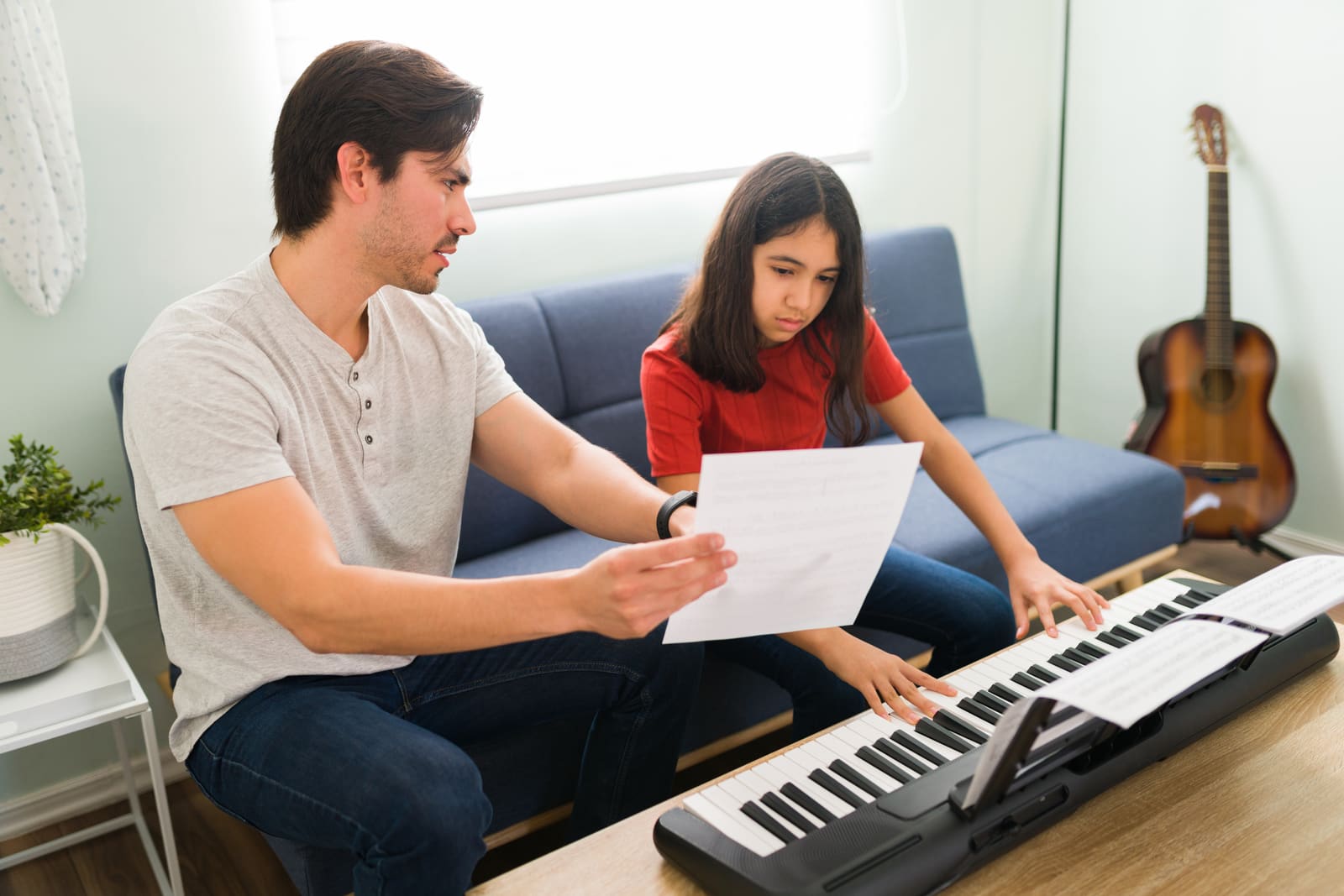
Music teacher education prepares you to teach music in K-12 schools, whether that means directing a high school band, running an elementary general music room, or leading choir and orchestra. The degree blends serious musicianship, theory, and applied study on your instrument with coursework in how children learn and how to run a classroom. The ranking below covers accredited bachelor's programs that lead to a state teaching license, and the page lists graduation rates and published costs so you can compare programs side by side.
- In-state tuition typically runs from $4,704 to $57,990 a year, with a median near $25,290.
- 166 of 417 ranked programs sit at public universities, and 28 offer an online or hybrid option.
- Most lead to an initial state teaching license, which means supervised student teaching plus a licensure exam (37 of 52 US jurisdictions use the Praxis series).
- We rank on graduation rate first, then selectivity and affordability, all from federal IPEDS data.
- 1
University of Florida
98score- 91%Grad rate
- $4,477/yrIn-state tuition
- $25,694/yrOut-of-state tuition
- 24%Admit rate
- 36,573Undergrads
- 9Grads/yr
- 1400SAT mid
- Bachelor of Music in Music Education (BME)
- National Association of Schools of Music (NASM)-accredited
- On-campus
About the programThe University of Florida Bachelor of Music in Music Education prepares candidates for Florida Music K-12 teacher certification, with choral (123 credits) and instrumental (125 credits) tracks. The curriculum builds music content, ensemble, and pedagogy coursework leading to a student-teaching internship (MUE 4940). Graduates must pass the General Knowledge Test and the Music K-12 Subject Area Test of the Florida Teacher Certification Examination. The catalog states the University of Florida is accredited by NASM. Delivery is on-campus; no online option is indicated for this major. This bachelor's-level music teacher education program prepares graduates for work as secondary school teachers in Florida.
Why it ranks hereProgram pageWe rank on the things that actually shape a teaching degree: whether students finish, how hard it is to get in, and the price of admission. Its strongest card is completion: a 91% graduation rate lands it in the top 1% of programs nationwide, and since finishing counts for the most, that does much of the work. Admissions are competitive, a 24% acceptance rate, which nudges it further up. Cost only helps its case: at $4,477 in state, tuition runs below the national median, so students are not paying a premium for those results. Together, that is one of the strongest profiles on the page.
- 2
Florida State University
96score- 86%Grad rate
- $4,640/yrIn-state tuition
- $19,084/yrOut-of-state tuition
- 24%Admit rate
- 32,720Undergrads
- 37Grads/yr
- 1340SAT mid
- Bachelor of Music Education (BME)
- National Association of Schools of Music (NASM)-accredited
- On-campus
About the programFSU's Bachelor of Music Education is a 134 semester hour degree preparing candidates for Florida Music K-12 teacher certification in choral, instrumental, or elementary and secondary general music. Students apply to the Professional Sequence after about 45 hours and complete 51 to 54 semester hours of music education coursework including a teaching internship. The College of Music has been a fully accredited member of the National Association of Schools of Music since 1930. Completion requires passing Florida certification exams. Delivery is on-campus, with private study, ensembles, and field teaching at all levels. As a bachelor's degree in music teacher education, it is one of the programs that lead to careers as secondary school teachers in Florida.
Why it ranks hereProgram pageThree things decide where a program lands on this list: how many students finish, how selective it is, and what it costs. Start with the outcome that matters most, 86% of students graduate, top 4% among programs nationwide, which is the biggest reason it sits where it does. It is genuinely selective too, admitting just 24% of applicants, a sign of a competitive, well-prepared cohort. Cost only helps its case: at $4,640 in state, tuition runs below the national median, so students are not paying a premium for those results. Together, that is one of the strongest profiles on the page.
- 3
University of California-Los Angeles
92score- 93%Grad rate
- $12,260/yrIn-state tuition
- $44,148/yrOut-of-state tuition
- 9%Admit rate
- 33,475Undergrads
- 12Grads/yr
- Bachelor of Arts in Music Education
- On-campus
About the programAt UCLA's Herb Alpert School of Music, the Bachelor of Arts in Music Education prepares students to lead classroom, instrumental, and choral or vocal music, blending artistry with the practical work of teaching. Musicianship stays central through theory, history, conducting, and performance, while the education side, delivered jointly with the School of Education and Information Studies through Center X, adds the methods a school music teacher relies on. What makes the structure appealing is its efficiency, since students may elect to fold a California Preliminary Credential in Music Education into the major and finish both the degree and the credential in about four years, completing the credential during the senior year. Those who prefer another route can instead earn a California Subject Matter Waiver in music. All of it happens on campus in Los Angeles. A bachelor's-level path in music teacher education, it builds toward a career among secondary school teachers in California.
Why it ranks hereProgram pageIts rank is built from three numbers: graduation rate, admission rate, and in-state tuition, in that order of weight. Its strongest card is completion: a 93% graduation rate lands it in the top 1% of programs nationwide, and since finishing counts for the most, that does much of the work. Admissions are competitive, a 9% acceptance rate, which nudges it further up. Cost only helps its case: at $12,260 in state, tuition runs below the national median, so students are not paying a premium for those results. Strong on the measures that matter most, it earns a place near the top.
- 4
University of Georgia
92score- 90%Grad rate
- $10,034/yrIn-state tuition
- $30,272/yrOut-of-state tuition
- 38%Admit rate
- 32,399Undergrads
- 15Grads/yr
- 1375SAT mid
- Bachelor of Music in Music Education (BMus)
- On-campus
About the programThe University of Georgia's Hugh Hodgson School of Music offers a Bachelor of Music in Music Education, preparing students to teach general, choral, and instrumental music in grades K-12, with separate choral and instrumental degree tracks. The curriculum pairs music study with teacher preparation, and students complete field experience and clinical practice arranged through the College of Education. Graduates earn Georgia teacher certification in music. The program is taught on campus in Athens, Georgia. As a bachelor's degree in music teacher education, it is one of the programs that lead to careers as secondary school teachers in Georgia.
Why it ranks hereProgram pageThree things decide where a program lands on this list: how many students finish, how selective it is, and what it costs. Start with the outcome that matters most, 90% of students graduate, top 1% among programs nationwide, which is the biggest reason it sits where it does. A 38% admission rate makes it moderately selective, neither a gatekeeper nor open enrollment. Cost only helps its case: at $10,034 in state, tuition runs below the national median, so students are not paying a premium for those results. Strong on the measures that matter most, it earns a place near the top.
- 5
University of Michigan-Ann Arbor
91score- 93%Grad rate
- $18,516/yrIn-state tuition
- $62,749/yrOut-of-state tuition
- 16%Admit rate
- 34,454Undergrads
- 7Grads/yr
- 1445SAT mid
- Bachelor of Music in Music Education
- On-campus
About the programThe Bachelor of Music in Music Education at Michigan's School of Music, Theatre & Dance is made for performers who want to carry their art into K-12 classrooms, teaching instrumental or choral music at both the elementary and secondary levels. Applicants arrive with a substantial performance background, and the instrumental track keeps that emphasis front and center: at least 130 credits, roughly 40 of them in performance, alongside study in music theory, musicology, conducting, ensembles, piano, and music education. Private lessons and student teaching round out a curriculum that treats musicianship and pedagogy as one pursuit. Students who want both depths can pursue a dual degree in music education and performance, usually adding about a year. The student teaching capstone leads to Michigan music teacher certification, and the program is delivered on campus. Graduates of this music teacher education program at the bachelor's level often go on to work as secondary school teachers.
Why it ranks hereProgram pageIts rank is built from three numbers: graduation rate, admission rate, and in-state tuition, in that order of weight. Its strongest card is completion: a 93% graduation rate lands it in the top 1% of programs nationwide, and since finishing counts for the most, that does much of the work. Admissions are competitive, a 16% acceptance rate, which nudges it further up. Cost only helps its case: at $18,516 in state, tuition runs below the national median, so students are not paying a premium for those results. Strong on the measures that matter most, it earns a place near the top.
- 6
University of Wisconsin-Madison
91score- 90%Grad rate
- $10,006/yrIn-state tuition
- $40,506/yrOut-of-state tuition
- 45%Admit rate
- 38,040Undergrads
- 7Grads/yr
- 1450SAT mid
- Bachelor of Music: Education (BM)
- National Association of Schools of Music (NASM)-accredited
- On-campus
About the programThe Bachelor of Music: Education at UW-Madison is a 120-credit degree offered jointly by the Mead Witter School of Music and the School of Education, a partnership that keeps musical artistry and teaching preparation in close conversation. Students choose between Choral/General and Instrumental/General options and move through music content, methods, and a stretch of student teaching in general and either vocal or instrumental music. Completing the degree, together with the required statutory and certification steps, qualifies graduates for a Wisconsin K-12 music teaching license under PI 34, though the university is clear that the degree by itself is not enough for licensure. The institution is an accredited member of the National Association of Schools of Music. Instruction takes place on campus in Madison. This bachelor's-level music teacher education program prepares graduates for work as secondary school teachers in Wisconsin.
Why it ranks hereProgram pageThree things decide where a program lands on this list: how many students finish, how selective it is, and what it costs. Start with the outcome that matters most, 90% of students graduate, top 1% among programs nationwide, which is the biggest reason it sits where it does. A 45% admission rate makes it moderately selective, neither a gatekeeper nor open enrollment. Cost only helps its case: at $10,006 in state, tuition runs below the national median, so students are not paying a premium for those results. On balance it is a well-rounded pick, which is what earns it a spot this high.
- 7
University of Maryland-College Park
90score- 89%Grad rate
- $10,087/yrIn-state tuition
- $39,464/yrOut-of-state tuition
- 45%Admit rate
- 31,133Undergrads
- 14Grads/yr
- 1465SAT mid
- Bachelor of Music Education (B.M.E.)
- On-campus
About the programThe University of Maryland School of Music offers a Bachelor of Music Education for students who want to teach music from PreK through grade 12, blending serious musicianship with the practical work of leading a classroom. Candidates choose a concentration in either instrumental music education or choral-general music education, then pair music and music-education coursework with a K-12 field sequence. That sequence is deliberately broad, culminating in student teaching across both elementary and secondary settings so future teachers experience the full age range they are certified to reach. Teaching certification is awarded through the College of Education, whose programs are accredited by the Association for Advancing Quality in Educator Preparation. The program is delivered on campus. A bachelor's-level path in music teacher education, it builds toward a career among secondary school teachers in Maryland.
Why it ranks hereProgram pageIts rank is built from three numbers: graduation rate, admission rate, and in-state tuition, in that order of weight. Its strongest card is completion: a 89% graduation rate lands it in the top 2% of programs nationwide, and since finishing counts for the most, that does much of the work. A 45% admission rate makes it moderately selective, neither a gatekeeper nor open enrollment. Cost only helps its case: at $10,087 in state, tuition runs below the national median, so students are not paying a premium for those results. No single weakness drags it down, and that consistency lands it in the upper tier.
- 8
University of Washington-Seattle Campus
89score- 85%Grad rate
- $11,869/yrIn-state tuition
- $42,105/yrOut-of-state tuition
- 39%Admit rate
- 40,684Undergrads
- 10Grads/yr
- Bachelor of Music in Music Education
- On-campus
About the programThe Bachelor of Music in Music Education at the University of Washington-Seattle blends serious performance training with the classroom preparation needed for a Washington State teaching license, certifying graduates to teach music in grades K-12 once they finish full-time student teaching. Students commit to either an instrumental or vocal emphasis, yet the coursework is built to ready them for instrumental, vocal, and general music settings alike. Getting in takes two auditions, one for the School of Music and a separate one for Music Education, a sign of how much the program values both musicianship and teaching readiness. Along the way, candidates conduct school bands, choirs, and orchestras and complete supervised teaching in Seattle-area public schools, so their practice is grounded in real ensembles from the start. Post-baccalaureate certification and MA-plus-certification routes round out the options for those who arrive by other paths. Graduates of this music teacher education program at the bachelor's level often go on to work as secondary school teachers.
Why it ranks hereProgram pageThree things decide where a program lands on this list: how many students finish, how selective it is, and what it costs. Start with the outcome that matters most, 85% of students graduate, top 5% among programs nationwide, which is the biggest reason it sits where it does. A 39% admission rate makes it moderately selective, neither a gatekeeper nor open enrollment. Cost only helps its case: at $11,869 in state, tuition runs below the national median, so students are not paying a premium for those results. On balance it is a well-rounded pick, which is what earns it a spot this high.
- 9
University of Illinois Urbana-Champaign
87score- 85%Grad rate
- $14,975/yrIn-state tuition
- $36,804/yrOut-of-state tuition
- 42%Admit rate
- 37,140Undergrads
- 39Grads/yr
- 1415SAT mid
- Bachelor of Music Education
- On-campus
About the programFor musicians who want to lead school music programs, the University of Illinois Urbana-Champaign's Bachelor of Music Education prepares graduates to teach across grades pre-kindergarten through 12. Housed in the School of Music, the on-campus program lets students shape their path through one of four concentrations in choral, general, or instrumental music, or technology. Rather than saving practice for the end, it sends students into field experiences throughout all four years, then brings that experience to a head in a full student teaching semester. The steady classroom exposure means candidates grow into the role gradually. Completing the degree prepares them for recommendation for Illinois State Board of Education licensure. Earning a bachelor's degree in music teacher education is a common route toward becoming one of Illinois's secondary school teachers.
Why it ranks hereProgram pageWe rank on the things that actually shape a teaching degree: whether students finish, how hard it is to get in, and the price of admission. Its strongest card is completion: a 85% graduation rate lands it in the top 5% of programs nationwide, and since finishing counts for the most, that does much of the work. A 42% admission rate makes it moderately selective, neither a gatekeeper nor open enrollment. Cost only helps its case: at $14,975 in state, tuition runs below the national median, so students are not paying a premium for those results. No single weakness drags it down, and that consistency lands it in the upper tier.
- 10
Auburn University
87score- 82%Grad rate
- $11,016/yrIn-state tuition
- $33,048/yrOut-of-state tuition
- 46%Admit rate
- 27,907Undergrads
- 12Grads/yr
- 1325SAT mid
- Bachelor of Music Education (Music Education: Instrumental and Vocal)
- On-campus
About the programAuburn University's Bachelor of Music Education, offered in both instrumental and vocal tracks, is a 128-credit degree for musicians who want to lead K-12 school music programs. Delivered by the Department of Music, it blends three things a strong music teacher needs, basic musicianship, performance, and education coursework, so candidates grow as artists and as instructors at the same time. Field experiences begin in schools earlier in the program and lead into a full-semester clinical residency worth 12 credits in the senior spring, the capstone where students take the podium themselves. Candidates must meet Alabama State Department of Education requirements throughout. Completing the degree leads to Alabama certification as a K-12 music teacher. All of it takes place on campus in Auburn. Earning a bachelor's degree in music teacher education is a common route toward becoming one of Alabama's secondary school teachers.
Why it ranks hereProgram pageThe ranking rewards programs that graduate their students, stay at least somewhat selective, and keep tuition reasonable, so here is how this one measures up. Its strongest card is completion: a 82% graduation rate lands it in the top 8% of programs nationwide, and since finishing counts for the most, that does much of the work. A 46% admission rate makes it moderately selective, neither a gatekeeper nor open enrollment. Cost only helps its case: at $11,016 in state, tuition runs below the national median, so students are not paying a premium for those results. No single weakness drags it down, and that consistency lands it in the upper tier.
- 11
Ohio State University-Main Campus
86score- 88%Grad rate
- $12,180/yrIn-state tuition
- $38,958/yrOut-of-state tuition
- 61%Admit rate
- 46,815Undergrads
- 24Grads/yr
- 1395SAT mid
- Bachelor of Music Education (BME)
- On-campus
About the programOhio State's Bachelor of Music Education is designed for musicians who want to lead classrooms and ensembles, preparing students for an initial Ohio teaching license spanning prekindergarten through grade 12. The curriculum lets students specialize through general, choral, and instrumental concentrations, so the training fits the setting each teacher hopes to enter. What distinguishes the program is its carefully sequenced field work, moving from early field experience and structured observation and tutoring into supervised placements and a culminating student teaching term. Those placements span urban, rural, and suburban schools around Columbus, giving candidates a feel for varied communities. Students apply for professional standing once prerequisite coursework and field experiences are complete, and all instruction is campus based. Earning a bachelor's degree in music teacher education is a common route toward becoming one of Ohio's secondary school teachers.
Why it ranks hereProgram pageWhere it lands is a story about completion first, then selectivity, then cost. Start with the outcome that matters most, 88% of students graduate, top 2% among programs nationwide, which is the biggest reason it sits where it does. A 61% admission rate makes it moderately selective, neither a gatekeeper nor open enrollment. Cost only helps its case: at $12,180 in state, tuition runs below the national median, so students are not paying a premium for those results. On balance it is a well-rounded pick, which is what earns it a spot this high.
- 12
University of Connecticut
85score- 83%Grad rate
- $17,010/yrIn-state tuition
- $39,678/yrOut-of-state tuition
- 52%Admit rate
- 20,056Undergrads
- 18Grads/yr
- 1325SAT mid
- Music Education (Integrated Bachelor's/Master's)
- On-campus
About the programThe University of Connecticut delivers its Music Education program as an Integrated Bachelor's/Master's, a partnership between the School of Fine Arts and the Neag School of Education that carries students from a bachelor's into a Master of Arts. Entering as pre-teaching music majors, students earn admission to Neag in their fourth semester, then work through roughly 43 to 49 undergraduate music credits, some 50 to 51 professional education credits, and a 24-credit graduate concentration. The heart of the final semester is directed student teaching, a nine-credit experience that anchors the transition to the classroom. All of this points toward initial Connecticut certification to teach music in grades PK-12, spanning band, orchestra, and chorus. Instruction is delivered in person at Storrs. A bachelor's-level path in music teacher education, it builds toward a career among secondary school teachers in Connecticut.
Why it ranks hereProgram pageIts rank is built from three numbers: graduation rate, admission rate, and in-state tuition, in that order of weight. Its strongest card is completion: a 83% graduation rate lands it in the top 7% of programs nationwide, and since finishing counts for the most, that does much of the work. A 52% admission rate makes it moderately selective, neither a gatekeeper nor open enrollment. Cost only helps its case: at $17,010 in state, tuition runs below the national median, so students are not paying a premium for those results. No single weakness drags it down, and that consistency lands it in the upper tier.
- 13
Brigham Young University
84score- 81%Grad rate
- $6,688/yrTuition (in or out of state)
- 68%Admit rate
- 32,952Undergrads
- 20Grads/yr
- 1365SAT mid
- Bachelor of Music in Music Education
- On-campus
About the programThe Bachelor of Music in Music Education at BYU requires roughly 88 to 92 credits and offers emphases in general, instrumental, and choral music, all leading to K-12 licensure. Candidates begin practical teaching in public schools during their first semester and complete 12 credits of secondary student teaching in the final semester. Graduation requires completing Utah State Board of Education licensing requirements, and the catalog states the program meets educational requirements designed to lead to a professional license in Utah. Instruction is delivered on campus. As a bachelor's degree in music teacher education, it is one of the programs that lead to careers as secondary school teachers in Utah.
Why it ranks hereProgram pageIts place on the list comes down to outcomes, selectivity, and price, weighted in that order. Start with the outcome that matters most, 81% of students graduate, top 8% among programs nationwide, which is the biggest reason it sits where it does. A 68% admission rate makes it moderately selective, neither a gatekeeper nor open enrollment. Cost only helps its case: at $6,688 in state, tuition runs below the national median, so students are not paying a premium for those results. On balance it is a well-rounded pick, which is what earns it a spot this high.
- 14
Pennsylvania State University-Main Campus
83score- 86%Grad rate
- $20,066/yrIn-state tuition
- $41,212/yrOut-of-state tuition
- 61%Admit rate
- 42,604Undergrads
- 21Grads/yr
- 1330SAT mid
- Bachelor of Music Education (B.M.E.)
- National Association of Schools of Music (NASM)-accredited
- On-campus
About the programThis Bachelor of Music Education requires a minimum of 129.5 credits and prepares students to teach instrumental, vocal, and general music in elementary and secondary schools. Graduates are prepared to receive the Pennsylvania Instructional I certificate for teaching music PK-12. Students must meet entrance requirements for the teacher certification program and complete music coursework plus SPLED 400 and SPLED 403A or 403B before student teaching. The program culminates in a semester of student teaching (MUSIC 495A, 495B, 495C, 12 credits) during the final year. The program is campus based at University Park. This bachelor's-level music teacher education program prepares graduates for work as secondary school teachers in Pennsylvania.
Why it ranks hereProgram pageWe rank on the things that actually shape a teaching degree: whether students finish, how hard it is to get in, and the price of admission. Its strongest card is completion: a 86% graduation rate lands it in the top 4% of programs nationwide, and since finishing counts for the most, that does much of the work. A 61% admission rate makes it moderately selective, neither a gatekeeper nor open enrollment. Cost only helps its case: at $20,066 in state, tuition runs below the national median, so students are not paying a premium for those results. No single weakness drags it down, and that consistency lands it in the upper tier.
- 15
University of North Carolina Wilmington
81score- 71%Grad rate
- $4,443/yrIn-state tuition
- $21,318/yrOut-of-state tuition
- 64%Admit rate
- 15,254Undergrads
- 2Grads/yr
- 1285SAT mid
- Music Education, B.M.
- On-campus
About the programUNC Wilmington's Bachelor of Music in Music Education is built for musicians who want to teach across the full K-12 span, and it treats performance and pedagogy as two halves of the same preparation. Alongside music theory, history, conducting, and applied study, students move through instrumental, vocal, and general music methods that carry field experience into real classrooms. Those methods courses connect candidates with cooperating music educators in local PK-12 schools and with community outreach projects, so teaching skills develop in front of actual students. A collaboration between the Watson College of Education and the music faculty keeps musicianship and classroom craft in balance throughout. Completing the degree qualifies graduates for the North Carolina Class A teaching license in K-12 music, and the program is delivered on campus. Earning a bachelor's degree in music teacher education is a common route toward becoming one of North Carolina's secondary school teachers.
Why it ranks hereProgram pageWhere it lands is a story about completion first, then selectivity, then cost. Start with the outcome that matters most, 71% of students graduate, top 22% among programs nationwide, which is the biggest reason it sits where it does. A 64% admission rate makes it moderately selective, neither a gatekeeper nor open enrollment. Cost only helps its case: at $4,443 in state, tuition runs below the national median, so students are not paying a premium for those results. On balance it is a well-rounded pick, which is what earns it a spot this high.
- 16
Northwestern University
80score- 95%Grad rate
- $67,158/yrTuition (in or out of state)
- 8%Admit rate
- 9,399Undergrads
- 7Grads/yr
- 1540SAT mid
- Bachelor of Music in Music Education
- On-campus
About the programThe Henry and Leigh Bienen School of Music offers the Bachelor of Music in Music Education, a certification-track degree combining core music study, a performance major with three years of applied study, and music education methods coursework. Every methods-based course includes weekly field experiences in area K-12 schools, and the program draws on collaborations with more than 60 Chicago-area schools for practice teaching. The degree prepares students for Illinois teacher licensure to teach music. Delivery is on-campus in Evanston. Earning a bachelor's degree in music teacher education is a common route toward becoming one of Illinois's secondary school teachers.
Why it ranks hereProgram pageIts rank is built from three numbers: graduation rate, admission rate, and in-state tuition, in that order of weight. Its strongest card is completion: a 95% graduation rate lands it in the top 1% of programs nationwide, and since finishing counts for the most, that does much of the work. Admissions are competitive, a 8% acceptance rate, which nudges it further up. The one drag is price, $67,158 in state, above the national median, so it earns its rank on outcomes rather than affordability.
- 17
Vanderbilt University
80score- 94%Grad rate
- $65,008/yrTuition (in or out of state)
- 6%Admit rate
- 7,221Undergrads
- 9Grads/yr
- 1535SAT mid
- Bachelor of Music (B.Mus.) with music education licensure pathway
- On-campus
About the programVanderbilt's Blair School of Music opens a route into K-12 music teaching through a five-year Bachelor of Music and Master of Education pathway offered with Peabody College. Students earn the B.Mus. in four years, then complete the M.Ed. in a fifth calendar year, choosing a licensure track in either instrumental music or vocal and general music, each spanning K-12. The undergraduate years blend the Blair music major with liberal arts study, professional education courses, and practica, and the program leans hard on repeated practical experiences and student teaching so candidates learn by doing. Full teacher licensure is completed through that fifth-year M.Ed. component, and graduates are certified to teach in Tennessee with reciprocity in additional states. Instruction takes place on campus in Nashville. This bachelor's-level music teacher education program prepares graduates for work as secondary school teachers in Tennessee.
Why it ranks hereProgram pageThree things decide where a program lands on this list: how many students finish, how selective it is, and what it costs. Start with the outcome that matters most, 94% of students graduate, top 1% among programs nationwide, which is the biggest reason it sits where it does. It is genuinely selective too, admitting just 6% of applicants, a sign of a competitive, well-prepared cohort. The one drag is price, $65,008 in state, above the national median, so it earns its rank on outcomes rather than affordability.
- 18
Boston University
79score- 89%Grad rate
- $66,670/yrTuition (in or out of state)
- 11%Admit rate
- 18,805Undergrads
- 4Grads/yr
- 1475SAT mid
- Bachelor of Music (BM) in Music Education
- On-campus
About the programThis Bachelor of Music in Music Education requires a minimum of 132 units and prepares students to teach music in PreK-12 settings while developing as performing musicians. At completion, students are eligible for an initial PreK-12 license in vocal, instrumental, or general music teaching from the Massachusetts Department of Elementary and Secondary Education. Licensure requires a 300-hour practicum with a department-approved supervisor, entered after passing two pre-practicum gateway assessments, plus regular pre-practicum observation and assisting in area schools. During the final term candidates teach off campus in a licensed K-12 school. Delivery is on campus. This bachelor's-level music teacher education program prepares graduates for work as secondary school teachers in Massachusetts.
Why it ranks hereProgram pageThe ranking rewards programs that graduate their students, stay at least somewhat selective, and keep tuition reasonable, so here is how this one measures up. Its strongest card is completion: a 89% graduation rate lands it in the top 2% of programs nationwide, and since finishing counts for the most, that does much of the work. Admissions are competitive, a 11% acceptance rate, which nudges it further up. The one drag is price, $66,670 in state, above the national median, so it earns its rank on outcomes rather than affordability.
- 19
New York University
79score- 88%Grad rate
- $62,796/yrTuition (in or out of state)
- 9%Admit rate
- 29,060Undergrads
- 12Grads/yr
- 1520SAT mid
- Bachelor of Music in Music Education, All Grades, Initial Certification
- On-campus
About the programThis NYU Steinhardt Bachelor of Music in Music Education leads to eligibility for New York State initial certification as a teacher of music for grades PK-12. The curriculum combines liberal arts, intensive music study, theory and history, and music pedagogy, with students completing two semesters of student teaching in New York City public and independent schools and community music settings. Both the program page and the How to Apply page carry a Not Accepting Applications banner stating enrollment has been suspended. No explicit programmatic accreditation sentence (NASM or CAEP) was found in the page text. Earning a bachelor's degree in music teacher education is a common route toward becoming one of New York's secondary school teachers.
Why it ranks hereProgram pageWhere it lands is a story about completion first, then selectivity, then cost. Start with the outcome that matters most, 88% of students graduate, top 2% among programs nationwide, which is the biggest reason it sits where it does. It is genuinely selective too, admitting just 9% of applicants, a sign of a competitive, well-prepared cohort. The one drag is price, $62,796 in state, above the national median, so it earns its rank on outcomes rather than affordability.
- 20
University of Vermont
79score- 79%Grad rate
- $16,280/yrIn-state tuition
- $42,724/yrOut-of-state tuition
- 65%Admit rate
- 12,276Undergrads
- 4Grads/yr
- 1365SAT mid
- Teacher Education: Music Education (Grades PreK-12)
- On-campus
About the programThe University of Vermont's Music Education B.S. is offered jointly by the College of Education and Social Services and the Music department, and leads to a PreK-12 endorsement for teaching music. The program prepares candidates in choral, general, and instrumental music, and admission includes an audition. Students complete two practicum experiences at the elementary and secondary levels, then a full-time student teaching internship in the final semester. The degree leads to Vermont licensure and is delivered on campus. Earning a bachelor's degree in music teacher education is a common route toward becoming one of Vermont's secondary school teachers.
Why it ranks hereProgram pageThree things decide where a program lands on this list: how many students finish, how selective it is, and what it costs. Start with the outcome that matters most, 79% of students graduate, top 10% among programs nationwide, which is the biggest reason it sits where it does. A 65% admission rate makes it moderately selective, neither a gatekeeper nor open enrollment. Cost only helps its case: at $16,280 in state, tuition runs below the national median, so students are not paying a premium for those results.
- 21
Case Western Reserve University
78score- 87%Grad rate
- $66,020/yrTuition (in or out of state)
- 37%Admit rate
- 6,528Undergrads
- 3Grads/yr
- 1485SAT mid
- Bachelor of Science in Music Education
- On-campus
About the programCase Western Reserve University's Bachelor of Science in Music Education spans 125 credit hours and draws much of its musical training from the Joint Music Program with the Cleveland Institute of Music, giving students a conservatory-caliber grounding alongside their teacher preparation. The bulk of those credits sit in music, music education, and professional education, rounded out by general education. Candidates build classroom experience from their earliest courses through a formal student teaching placement, and demonstrate their readiness through an ePortfolio, the edTPA, and the Ohio Assessments for Educators. Graduates earn Ohio multi-age licensure covering PreK through grade 12, a credential that transfers to more than 40 other states. The program is approved by the Ohio Department of Education and accredited by both CAEP and the National Association of Schools of Music. Graduates of this music teacher education program at the bachelor's level often go on to work as secondary school teachers.
Why it ranks hereProgram pageWe rank on the things that actually shape a teaching degree: whether students finish, how hard it is to get in, and the price of admission. Its strongest card is completion: a 87% graduation rate lands it in the top 3% of programs nationwide, and since finishing counts for the most, that does much of the work. A 37% admission rate makes it moderately selective, neither a gatekeeper nor open enrollment. The one drag is price, $66,020 in state, above the national median, so it earns its rank on outcomes rather than affordability.
- 22
Bucknell University
77score- 86%Grad rate
- $67,446/yrTuition (in or out of state)
- 29%Admit rate
- 3,920Undergrads
- 3Grads/yr
- 1390SAT mid
- Bachelor of Music in Music Education
- On-campus
About the programBucknell University's Bachelor of Music in Music Education is built for aspiring music teachers who want conservatory-level musicianship alongside a teaching credential. The degree combines the College of Arts and Sciences core curriculum with 21 music credits for a total of 34 course credits, and students choose a vocal or instrumental emphasis, each shaped to meet the minimum requirements for PreK-12 music certification in Pennsylvania. That curriculum carries Pennsylvania Department of Education approval for professional certification. Along the way, candidates round out their craft through four semesters of secondary-instrument lessons, a functional keyboard requirement, at least a half solo recital, and an e-portfolio. The path culminates in a four-credit capstone pairing student teaching with a Student Teacher Seminar, tying performance skill to classroom practice. Graduates of this music teacher education program at the bachelor's level often go on to work as secondary school teachers.
Why it ranks hereProgram pageWhere it lands is a story about completion first, then selectivity, then cost. Start with the outcome that matters most, 86% of students graduate, top 4% among programs nationwide, which is the biggest reason it sits where it does. It is genuinely selective too, admitting just 29% of applicants, a sign of a competitive, well-prepared cohort. The one drag is price, $67,446 in state, above the national median, so it earns its rank on outcomes rather than affordability.
- 23
Trinity University
77score- 84%Grad rate
- $53,352/yrTuition (in or out of state)
- 26%Admit rate
- 2,518Undergrads
- 1Grads/yr
- 1420SAT mid
- Music (Precertification), B.M.
- On-campus
About the programTrinity's Bachelor of Music in Music Education is a precertification degree offered in three focus tracks: elementary general, choral, and instrumental music education. The four-year B.M. builds content and podium experience but does not itself confer a teaching license. Certification is earned through Trinity's five-year pathway, in which graduates complete a summer graduate program and a student-teaching internship to receive a Master of Arts in Teaching and Texas all-level (EC-12) music certification. The program is delivered on campus in San Antonio. Licensure is granted only upon completion of the fifth-year M.A.T., not the bachelor's alone. This bachelor's-level music teacher education program prepares graduates for work as secondary school teachers in Texas.
Why it ranks hereProgram pageWe rank on the things that actually shape a teaching degree: whether students finish, how hard it is to get in, and the price of admission. Its strongest card is completion: a 84% graduation rate lands it in the top 6% of programs nationwide, and since finishing counts for the most, that does much of the work. Admissions are competitive, a 26% acceptance rate, which nudges it further up. The one drag is price, $53,352 in state, above the national median, so it earns its rank on outcomes rather than affordability.
- 24
University of Delaware
77score- 81%Grad rate
- $14,600/yrIn-state tuition
- $39,190/yrOut-of-state tuition
- 71%Admit rate
- 20,026Undergrads
- 24Grads/yr
- 1280SAT mid
- Bachelor of Music in Music Education
- On-campus
About the programThe Bachelor of Music in Music Education prepares candidates for certification to teach music in elementary or secondary schools, with two tracks: instrumental and choral/general music. Students accumulate over 700 hours of K-12 teaching experience, including more than 150 practicum hours across elementary, middle, and high school classrooms plus 560 hours across two student teaching placements in the senior spring. A 4+1 option lets qualified students add an M.M. in Teaching. The program page states it is accredited by the Council for the Accreditation of Educator Preparation (CAEP) and the National Association of Schools of Music (NASM). Delivery is on campus. A bachelor's-level path in music teacher education, it builds toward a career among secondary school teachers in Delaware.
Why it ranks hereProgram pageIts place on the list comes down to outcomes, selectivity, and price, weighted in that order. Start with the outcome that matters most, 81% of students graduate, top 8% among programs nationwide, which is the biggest reason it sits where it does. A 71% admission rate makes it moderately selective, neither a gatekeeper nor open enrollment. Cost only helps its case: at $14,600 in state, tuition runs below the national median, so students are not paying a premium for those results.
- 25
Texas Christian University
76score- 86%Grad rate
- $61,650/yrTuition (in or out of state)
- 44%Admit rate
- 11,049Undergrads
- 34Grads/yr
- 1245SAT mid
- Bachelor of Music Education
- On-campus
About the programTCU's Bachelor of Music Education is offered with instrumental or vocal concentrations and prepares students for Texas all-level music teacher certification. Candidates gain classroom teaching experience embedded in methods courses and observe area school music programs before a full student teaching placement. The program is housed in the School of Music, and certification is administered through the College of Education, which lists Music among its all-level certification areas. Earning a bachelor's degree in music teacher education is a common route toward becoming one of Texas's secondary school teachers.
Why it ranks hereProgram pageIts rank is built from three numbers: graduation rate, admission rate, and in-state tuition, in that order of weight. Its strongest card is completion: a 86% graduation rate lands it in the top 4% of programs nationwide, and since finishing counts for the most, that does much of the work. A 44% admission rate makes it moderately selective, neither a gatekeeper nor open enrollment. The one drag is price, $61,650 in state, above the national median, so it earns its rank on outcomes rather than affordability.
How we rank
Each program is scored 0 to 100 against the other programs in its specialty: graduation rate (50%), selectivity by admission rate (30%), and affordability by in-state tuition (20%). Scores are percentile-based within the specialty, so they compare like with like. A program missing a field gets the neutral median for it, so it is neither rewarded nor punished. Earnings are intentionally excluded: federal per-school earnings are not yet published for education programs, and the field-level salary figure is identical for every school, so ranking on it would be meaningless. To keep the overall list from being dominated by a single state's public-university system, it shows at most 2 programs per state; the value, affordability, graduation-rate, and selectivity pages rank every program without that limit.
- Graduation rate: 50%
- Selectivity (admission rate): 30%
- Affordability (in-state tuition): 20%
What careers can you get with a bachelor's in Music Teacher Education?
Graduates most often go on to work as secondary school teachers. Nationally, the median wage for that occupation is $72,040, with most earning between $48,780 and $107,600, and roughly 1,065,210 people employed across the United States, per the U.S. Bureau of Labor Statistics. Music teachers work at both elementary and secondary levels; the secondary occupation is shown as a representative match.
Read the full guide on how to become a secondary school teacher, or see secondary school teachers pay by state →
Sources: BLS Occupational Employment and Wage Statistics, May 2025 (SOC 25-2031), and BLS Occupational Outlook Handbook. Wages are national and not school-specific.
Secondary School Teachers Salary by State in 2026
Median annual wage for secondary school teachers, by state. Highest is Washington at $102,670, lowest is Oklahoma at $48,710.
| State | Median wage |
|---|---|
| Washington | $102,670 |
| California | $101,370 |
| New York | $97,070 |
| Massachusetts | $95,260 |
| Rhode Island | $92,610 |
| District of Columbia | $82,750 |
| New Jersey | $82,200 |
| Connecticut | $80,970 |
| Illinois | $79,990 |
| Alaska | $79,650 |
| Oregon | $79,570 |
| Ohio | $78,800 |
| Pennsylvania | $78,800 |
| Maryland | $78,670 |
| Delaware | $77,960 |
| New Hampshire | $77,060 |
| Minnesota | $76,460 |
| Utah | $76,330 |
| Vermont | $76,220 |
| New Mexico | $75,900 |
| Georgia | $75,480 |
| Hawaii | $74,310 |
| Colorado | $72,900 |
| Virginia | $72,170 |
| Michigan | $66,030 |
| Nevada | $65,520 |
| Maine | $64,880 |
| Texas | $63,590 |
| Nebraska | $63,450 |
| Wisconsin | $62,870 |
| Guam | $62,860 |
| Wyoming | $62,690 |
| South Carolina | $62,580 |
| Alabama | $61,990 |
| Indiana | $61,880 |
| Tennessee | $61,860 |
| Idaho | $61,690 |
| Kentucky | $61,560 |
| North Dakota | $61,210 |
| Iowa | $61,200 |
| Montana | $60,990 |
| Florida | $60,410 |
| Kansas | $59,920 |
| Louisiana | $59,850 |
| Arkansas | $59,660 |
| Virgin Islands | $59,520 |
| Missouri | $59,240 |
| Puerto Rico | $59,100 |
| Arizona | $58,360 |
| North Carolina | $57,650 |
| West Virginia | $56,610 |
| South Dakota | $51,050 |
| Mississippi | $50,980 |
| Oklahoma | $48,710 |
Source: BLS Occupational Employment and Wage Statistics, May 2025.
How much a bachelor's in Music Teacher Education program costs
Published in-state tuition across the 417 ranked bachelor's programs typically runs from $4,704 to $57,990 a year, with a median near $25,290. Most of that spread is public versus private: public universities charge state residents the least, while private colleges set a single sticker price that applies to everyone. 166 of the 417 programs here are public, which is usually where the lowest in-state numbers come from.
Sticker price is rarely what a student pays. Grants and scholarships lower the net cost, and future teachers have aid written specifically for them: the federal TEACH Grant provides up to $4,000 a year to students who agree to teach a high-need subject in a low-income school, and many states add service scholarships and loan-forgiveness programs for people who commit to the classroom. Two costs to watch are out-of-state tuition, which at public schools often runs two to three times the resident rate, and mandatory fees and living expenses, which the tuition figure leaves out entirely.
What none of this changes is the paycheck at the end. The median wage for secondary school teachers is $72,040 regardless of where the degree was earned, so two graduates can reach the same salary having paid very different tuition to get there. That is exactly why affordability, essentially graduation rate per tuition dollar, is one of the factors we weight rather than an afterthought.
Sources: tuition and program data from IPEDS; the TEACH Grant from Federal Student Aid; wages from BLS OEWS.
How to get licensed to teach with a bachelor's in Music Teacher Education
A bachelor's in Music Teacher Education program prepares you academically, but teaching in a public school also requires a license issued by the state where you work. Every state runs its own credential, yet the path rhymes almost everywhere. You complete a state-approved preparation program, log supervised field experience that builds to a full term of student teaching, and pass one or more licensure exams, then apply to the state with a background check and, in most places, complete a mentored first year before the license becomes fully clear and renewable.
The exams are where states differ most. 37 of the 52 US jurisdictions use ETS's Praxis series to test basic skills and subject knowledge; the rest run their own, such as California's CBEST and CSET or New York's NYSTCE. A growing number also require a performance assessment like edTPA, in which candidates submit video and written evidence from their own student teaching. The grade-band and subject endorsements on your license, elementary versus a specific secondary subject, are set by the tests you pass and the program you complete.
Because the specifics are decided state by state, where you plan to teach matters as much as where you study. Licenses do not transfer automatically, though most states honor an out-of-state credential through interstate reciprocity, usually with some added coursework or testing. Check your target state's department of education for its exact requirements before you enroll.
Sources: licensure requirements from each state's department of education; the Praxis series from ETS; edTPA; programmatic standards from CAEP.
How does accreditation work in 2026 for a bachelor's in Music Teacher Education?
Two different things get called accreditation, and only one of them gets you licensed. Institutional accreditation comes first: a regional accreditor such as SACSCOC, the Higher Learning Commission, or the Middle States Commission reviews the whole university, and it is what lets credits transfer and federal financial aid flow. Any college worth considering has it, but on its own it says nothing specific about the quality of the education program.
Program, or programmatic, accreditation is the education-specific layer. The national accreditor is CAEP, the Council for the Accreditation of Educator Preparation, formed in 2013 when the two older bodies, NCATE and TEAC, merged; AAQEP is a newer alternative that a growing number of programs have adopted. A CAEP or AAQEP seal signals that the preparation program has been reviewed against national standards for clinical practice, content knowledge, and candidate outcomes.
The credential that actually licenses you, though, is state program approval. A state only allows its approved programs to recommend graduates for certification, so approval, not a national seal, is what turns your degree into a license, and it is also what makes interstate reciprocity possible. Plenty of strong programs carry state approval without a separate national accreditor, which is common and not a red flag. When you compare options, confirm two things: that the school is regionally accredited, and that the specific program is approved by the state where you intend to teach.
Programmatic accreditor: CAEP. State approval is granted by each state's department of education.
Ways to earn your bachelor's in Music Teacher Education
A traditional four-year, on-campus bachelor's is the most common route into teaching, and for good reason: the degree leans on in-person field placements that build to a full term of student teaching. That said, 28 of the 417 ranked programs advertise an online or hybrid option, which can suit paraprofessionals and career-changers already working in schools; the clinical hours still take place in a real classroom near you.
You do not have to start at a four-year school. Many students spend their first two years at a community college, earn an associate's, and transfer in, which trims the cost of the early coursework, and statewide articulation agreements often guarantee the credits apply. If you already hold a bachelor's in another field, you can usually skip a second degree entirely and enter through an alternative-certification program or a master's-with-licensure route built for career-changers.
Whatever the format, the non-negotiable is supervised clinical practice. Every licensure-track program includes a student-teaching placement, and some now pair it with a paid, year-long residency alongside a mentor teacher, an increasingly common model that eases the unpaid-semester crunch traditional student teaching can create.
Sources: online and program counts from IPEDS; alternative-certification pathways per the US Department of Education.
How to become a music teacher
The path runs from a bachelor's degree through student teaching and state licensure into your first year in the classroom.
- 1
Earn a bachelor's in music education program
Complete a four-year degree that combines applied music, theory, conducting, and methods courses. Most programs require an audition on your primary instrument or voice for admission.
- 2
Complete a state-approved preparation program
Music education degrees are usually built as approved teacher-preparation programs that include supervised student teaching, often split between an elementary and a secondary placement.
- 3
Pass the required licensure exams
Most states require a content test in music plus general teaching exams, commonly from the Praxis series or a state-specific equivalent. Exact tests and cut scores vary by state.
- 4
Apply for your state teaching license
Submit your transcripts, test scores, and program endorsement to the state, and clear a criminal background check and fingerprinting.
- 5
Complete a mentored first year
Many states pair new teachers with a mentor and require an induction or provisional period before you move to a standard license. Requirements differ from state to state.
Requirements summarized from the BLS Occupational Outlook Handbook and each state's department of education. Exact requirements vary by state.
Frequently asked questions about a Bachelor's in Music Teacher Education
Do you need a bachelor's in music education to teach music in public schools?
You typically need a bachelor's degree in music education from a state-approved program that includes student teaching to teach music in public schools. That combination is what makes you eligible for an initial teaching license, which public schools require.
How long does a bachelor's in music education take?
Becoming a music teacher takes about four years for the bachelor's degree, including a semester of student teaching near the end. Some students take longer because music education is credit-heavy, with ensembles, lessons, and recitals stacked on top of academic courses.
How much do music teachers earn with a bachelor's in music education in 2026?
Music teachers are usually paid on the same district salary schedule as other teachers at their grade level. The BLS median annual wage for Secondary School Teachers, Except Special and Career/Technical Education is $72,040, and pay varies widely by state, district, and years of experience.
Do you need a license to teach music with a bachelor's in music education?
To teach music in a public K-12 school, yes, you need a state teaching license with a music endorsement. Private schools sometimes hire without one, and specifics for both routes vary by state.
Can you earn a bachelor's in music education online?
You can earn a music education degree online only in limited ways, because ensembles, applied lessons, conducting, and student teaching need in-person work. You may find hybrid programs or online coursework for some requirements, but expect a significant on-campus and in-school component.
Is a bachelor's in music education worth it?
A music education degree is worth it if your goal is teaching music, offering a direct route into a licensed, stable profession with summers off and pension benefits in many districts. The same degree also builds performance and pedagogy skills that transfer to private studio teaching, community music programs, and graduate study.
Answers draw on IPEDS, the BLS Occupational Outlook Handbook, and each state's department of education.
Data sources for our Bachelor's in Music Teacher Education ranking
- Program counts, tuition, graduation and admission rates: IPEDS, US Department of Education.
- Wages and employment outlook: BLS Occupational Employment and Wage Statistics and the Occupational Outlook Handbook.
- Program accreditation: CAEP; state licensure requirements from each state's department of education.
- Program descriptions: each school's official catalog and program pages.